
When coming to this topic, we believe that so many posts have talked about that, but for Xpert BM, we have our own option. Maybe this post can help you when making some decisions.
First, we have to react to the definition: what is laminated glass, what is tempered glass?
Laminated Glass vs Tempered Glass: What about their definition?
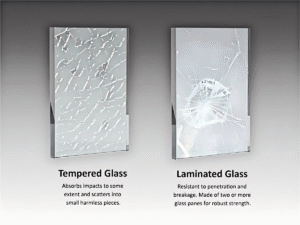
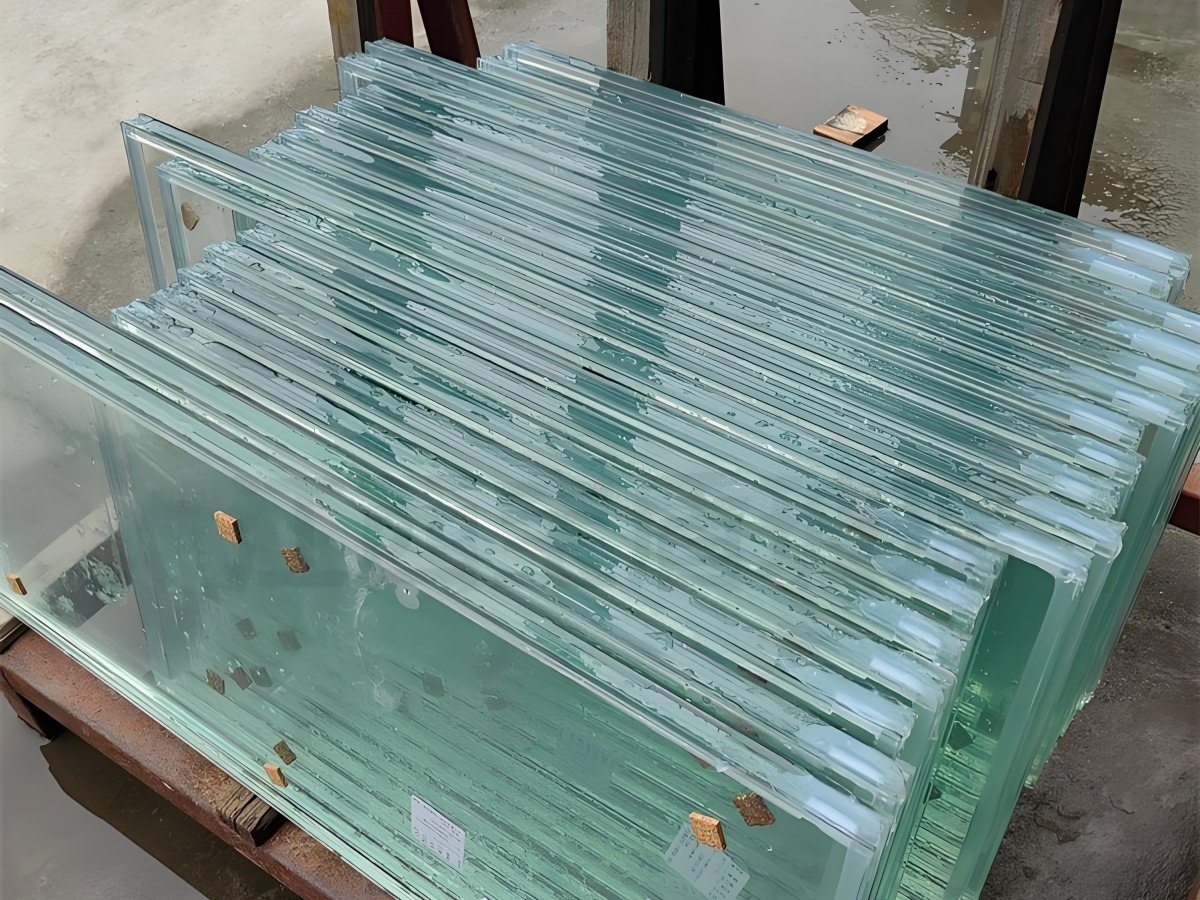
What is laminated glass? It is a type of safety glass made by bonding two or more layers of glass together with an interlayer (usually polyvinyl butyral, PVB, or ethylene-vinyl acetate, EVA) using heat and pressure. The interlayer keeps the layers of glass bonded even when broken, so the glass tends to stay in place rather than shatter into sharp pieces. This makes it safer and provides sound insulation, UV protection, and security benefits.
What is tempered glass? (also called toughened glass), which is a type of safety glass that has been heat-treated to increase its strength compared to normal annealed glass. The glass is heated to around 620°C–650°C and then rapidly cooled, which puts the surface into compression and the interior into tension. This process makes the glass about 4–5 times stronger than ordinary glass.
| Property | Laminated Glass | Tempered Glass |
|---|---|---|
| Structure | Multiple glass layers + interlayer | Single glass sheet, heat-treated |
| Breakage Behavior | Cracks but stays in place | Shatters into small pieces |
| Safety | Very high (stays intact) | High (no sharp shards) |
| Strength | Moderate | Very strong (4–5× ordinary glass) |
| Uses | Windshields, skylights, soundproof windows | Shower doors, phone screens, side windows |

Tempered Laminated Glass vs Tempered Glass: Which One is Suitable for Door & Window
When deciding between laminated glass vs tempered glass, there are several key factors to consider. Let’s take a closer look at the main influences:
1. Budget Considerations
In most cases, the final choice largely depends on budget.
After working with thousands of clients and projects, we’ve noticed a clear trend — the majority of customers choose tempered glass. This is because it offers a lower purchase and replacement cost, while maintaining high stability and reliable quality. It’s simply the most cost-effective option for most architectural applications.
That said, laminated glass is also a popular option when the budget allows. Choosing laminated glass from a high-quality supplier can significantly enhance project safety and provide an excellent long-term user experience. It’s often the preferred choice for premium projects where safety and performance are top priorities.
2. Regional Preferences
We’ve observed that European clients tend to prefer laminated glass, especially in coastal areas or regions with harsher environmental conditions. In these cases, they often use extra-thick laminated panels, such as 12+12mm or even 15+15mm, to ensure maximum safety and durability.
In contrast, regions with more stable climates or lower environmental risks — such as Southeast Asia, Africa, South America, and inland areas of the U.S., Canada, and continental Europe — typically opt for tempered glass, due to its excellent performance-to-cost ratio and easy maintenance.
3. Design and Engineering Factors
From a manufacturing standpoint, tempered glass offers exceptional production consistency and easy quality control, which translates to strong stability in installation, especially for projects requiring precise edge finishing.
However, safety can sometimes be a concern — particularly in high-altitude or elevated installations.
On the other hand, laminated glass, especially tempered laminated glass, may have slightly lower flatness compared to non-tempered options, and its edges are more difficult to standardize. For this reason, some designers and clients prefer non-tempered laminated glass when pursuing a more seamless or integrated look, such as in railing or edge alignment designs.

When it comes to Railing. Which is Better, Tempered vs Laminated Glass?
When it comes to choosing glass for your railing system, one of the most common (and often debated) questions is: Which is better — Laminated Glass vs Tempered Glass?
At first glance, laminated glass might seem like the clear winner over tempered glass. However, at Xpert BM, we believe that the “better” option always depends on your project’s specific conditions and safety requirements. Let’s break it down.
1. For Harsh Weather Conditions (Hurricane Zones)
If your project is located in an area with severe weather — such as hurricane-prone regions along the east or west coasts of the U.S., or Australia’s western coast — laminated glass is the smarter choice.
Laminated glass offers superior safety and protection compared to tempered glass. In the event of breakage, the interlayer (especially when made with SGP film) keeps the glass fragments adhered in place. This means the panel can remain standing even after impact, significantly reducing the risk of secondary injury or debris hazards.
2. For High-Rise or Elevated Applications
If your railing is part of a high-rise building or elevated structure, safety becomes an even greater concern. While tempered glass is indeed strong, it carries a small but real risk of spontaneous breakage due to internal stress or nickel sulfide inclusions.
In these cases, laminated glass provides an extra layer of security. Some clients opt to apply a safety film to single-pane tempered glass as a budget alternative, but this is not a long-term solution. Films can peel, discolor, or degrade over time — leading to more frequent maintenance and replacement compared to laminated glass.
3. For Ground-Level or Low-Risk Areas
On the other hand, if your glass railing is installed in a low-risk area — such as around a pool, patio, or ground-level balcony — tempered glass can be a practical and cost-effective option.
In these settings, 10mm or 12mm single tempered glass panels are commonly used and perform well while maintaining a clean, modern aesthetic. They’re especially popular for villa pools, gardens, and residential projects where extreme safety demands are lower.
In Summary
The debate between tempered and laminated glass has no absolute winner — it all depends on your project’s location, purpose, and safety needs.
If you’re still unsure which glass type is best for your railing system, Xpert BM’s professional team is always happy to help you make the right choice. We’ll provide expert advice tailored to your project’s environment and design goals.


Tempered vs Laminated glass, which one better, this statement seems to have reached its conclusion, because no matter who you choose, it’s not entirely correct; the only correct choice is one that considers the actual circumstances.
So in the future, when we have trouble making choices, we should try to look at their definitions, for example… What is laminated glass? What is tempered glass? Alternatively, understanding the context of your project and your budget will help you make a final decision faster.