First, what is single silver Low E glass?
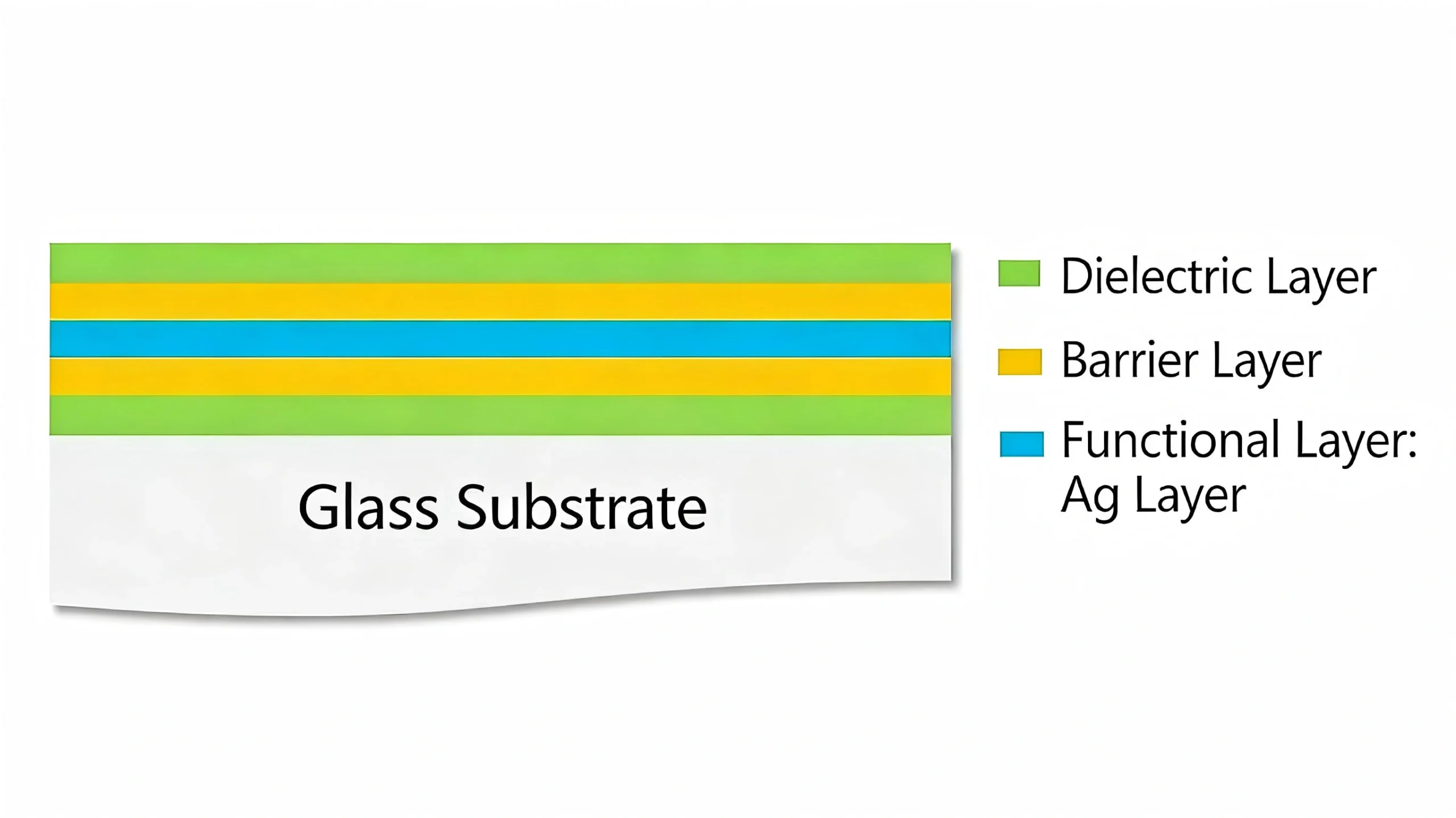
Single-silver Low-E glass refers to a low-emissivity coated glass in which the coating stack incorporates one functional silver layer.
Then, what is double silver Low E glass?
Double-silver Low-E glass refers to a low-emissivity coated glass that incorporates two functional silver layers within its multilayer coating stack.
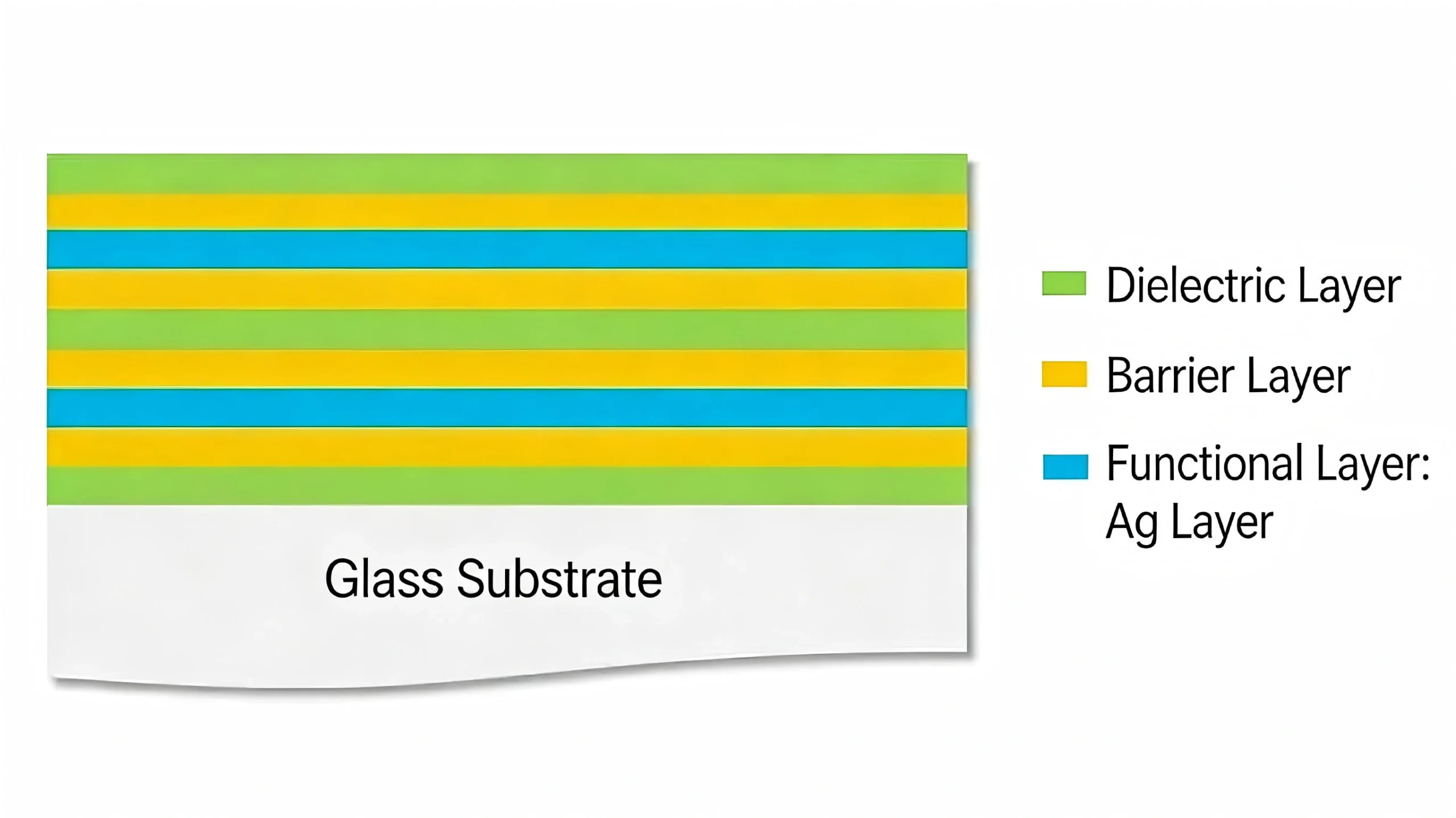
Finally, what about triple silver Low E glass?
Triple-silver Low-E glass incorporates three functional silver layers, further enhancing solar control performance while maintaining high visible light transmittance.
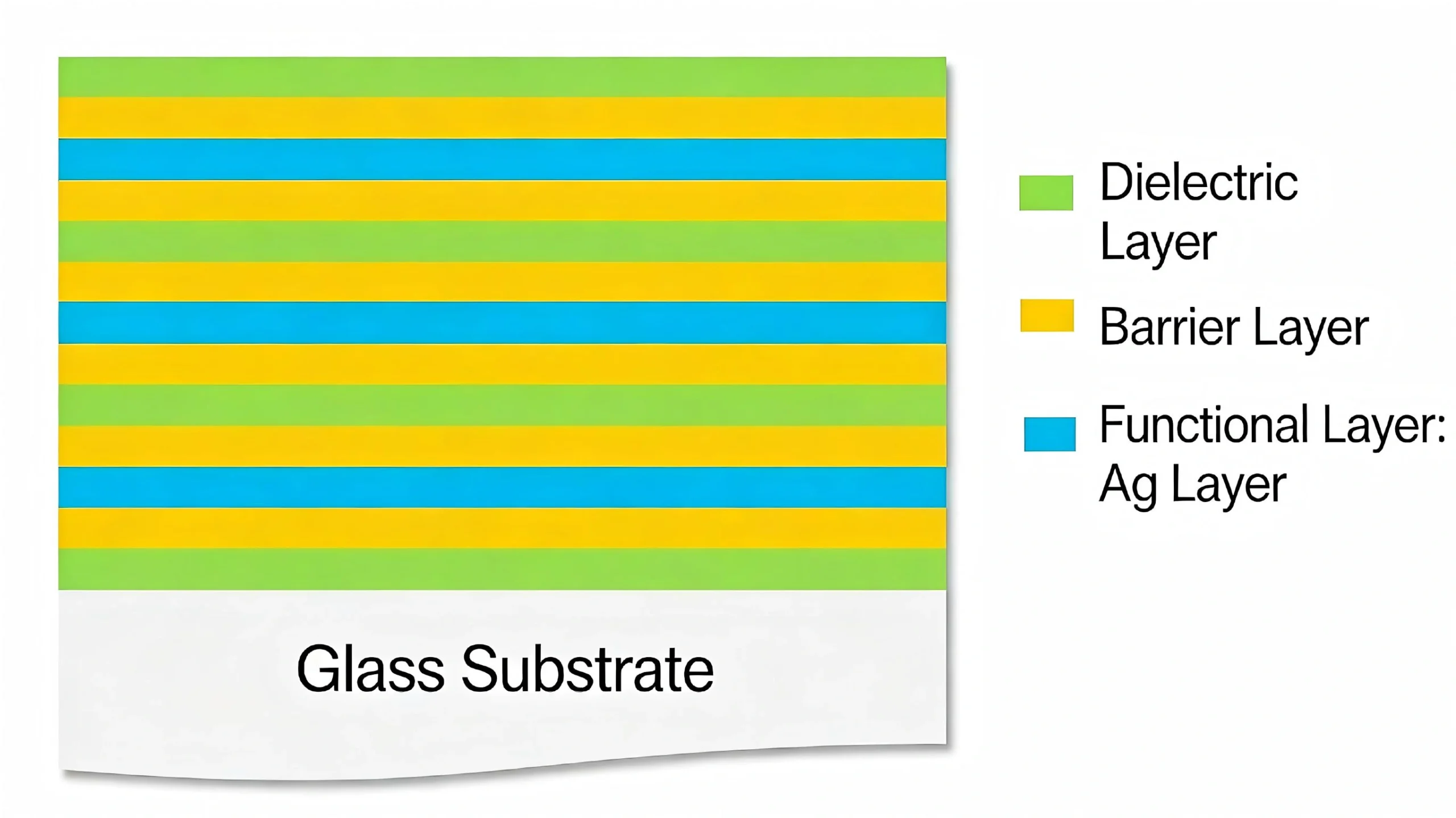
Although the coating structure consists of multiple functional layers, the total thickness of the multilayer coating stack is typically in the range of 50–300 nanometers.
Why such a thin coating can perform so well?
Despite being only tens to a few hundred nanometers thick, the silver-based Low-E coating achieves excellent thermal insulation and solar control performance. This is because its effectiveness comes not from thickness but from carefully designed multilayer optical engineering:
-
Functional silver layers: Even a single nanometer-scale silver layer reflects infrared radiation efficiently, reducing heat transfer through the glass.
-
Dielectric layers: Transparent oxide layers (e.g., SnO₂, TiO₂) sandwich the silver layers to protect them and fine-tune visible light transmission and reflectance.
-
Precise layer stacking: By controlling the thickness of each layer to the nanometer, engineers can achieve the optimal balance between low emissivity, high visible light transmittance, and solar heat control.
In short, the coating’s performance is determined by material properties and optical design, not by how thick it is. This is why multilayer Low-E glass can stay extremely thin while delivering superior energy efficiency.
The optical and thermal performance of single, double, and triple-silver Low-E insulated glass units (IGUs) is compared in a list format, as shown in Table 1. The last row in Table 1 shows the optical and thermal parameters of 3 mm clear glass as a reference.
Table 1 – Comparative Optical and Thermal Performance of Single-, Double-, and Triple-Silver Low-E IGU
| Glass Type | Visible Light Transmittance (VLT, %) | Solar Factor / SHGC | U-Value (W/m²·K) | Notes |
|---|---|---|---|---|
| Single-Silver Low-E IGU | 70–75 | 0.55–0.60 | 1.2–1.4 | Good daylight, moderate solar control |
| Double-Silver Low-E IGU | 65–70 | 0.35–0.45 | 1.0–1.2 | Enhanced solar control, lower U-value |
| Triple-Silver Low-E IGU | 60–65 | 0.25–0.35 | 0.9–1.1 | Maximum solar control, excellent insulation |
| Reference: 3 mm Clear Glass | 90 | 0.85 | 5.7 | Non-Low-E baseline |
As shown in the table above, the U-values (thermal transmittance, K-values) of insulated glass units (IGUs) made with single-, double-, and triple-silver Low-E glass are relatively similar. Moreover, under comparable visible light transmittance (VLT), the solar factor (g-value), shading coefficient (SC), and total infrared transmittance (gIR) decrease sequentially with the increase in the number of silver layers—particularly the total infrared transmittance gIR (highlighted in yellow in the table), where the difference is most pronounced. Meanwhile, the light-to-solar gain ratio (LSG) increases correspondingly.
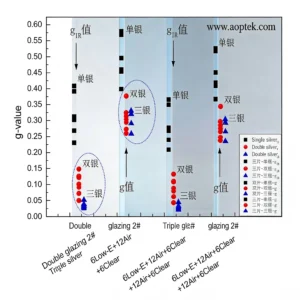
To further compare the g-value and gIR among different glass types, Obotai compiled data from various glass products and plotted a scatter diagram, as shown in Figure 4. From Figure 4, it can be seen that single-silver IGUs exhibit the highest g-value and gIR (black squares), clearly exceeding those of double-silver IGUs (red circles) and triple-silver IGUs (blue triangles). This indicates that single-silver IGUs allow more solar radiation heat to enter the interior.
Comparing double-silver and triple-silver IGUs, it is apparent that the difference in g-value between them is minimal, whereas the gIR shows a significant divergence. For triple-silver IGUs, gIR can be reduced to below 0.06, meaning that less than 6% of infrared heat penetrates into the interior.
Figure 4 – Compare the g-value and gIR among different glass types
Triple Silver Low E Glass: The New Darling of Modern Architecture
Based on the preceding analysis, Triple Silver Low E glass is the premier choice for low-energy buildings in hot climates or building sections requiring intensive summer shading, provided the budget allows. Triple Silver glazing offers the highest Light-to-Solar Gain (LSG) ratio; it maximizes visible light transmittance while minimizing heat transfer, effectively achieving the goal of “light without heat.”
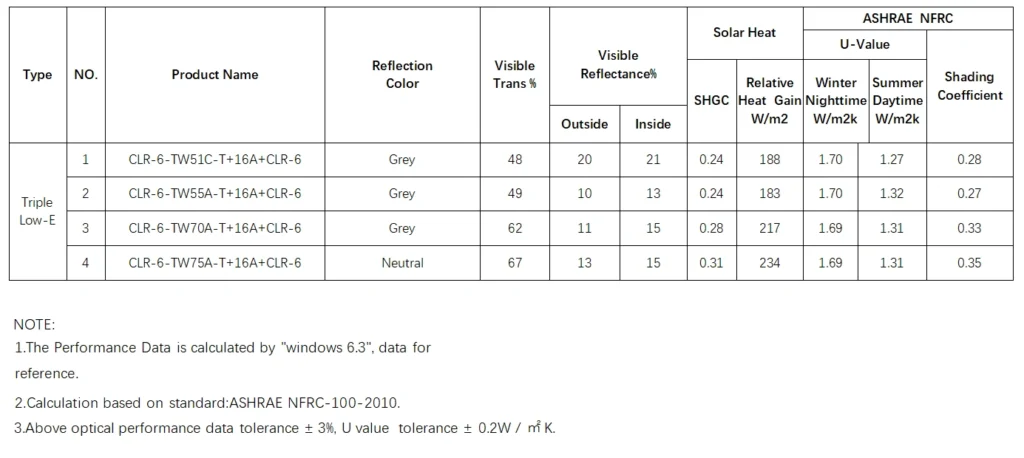
In developed Western markets, the use of Triple Silver Low E is already ubiquitous across commercial offices and private residences. Its accessibility is such that standardized Triple Silver windows are readily available even in retail home centers, thanks to mature regulatory frameworks and high levels of technical and market standardization. Similarly, China is experiencing a rapid surge in adoption, with an increasingly diverse range of high-performance products now available (see Table 2).
Table 2 – Technical Specifications: Triple Silver Low E Glass
Experience Ultimate Comfort with Triple Silver Low E Glass
Installing Triple Silver Low E glass isn’t just an upgrade; it’s a revolution in indoor thermal comfort. That “burning” feeling you get near a window is caused by Near-Infrared (NIR) rays.
- The gIR Advantage: The lower the gIR (Infrared Solar Heat Gain), the cooler you stay.
- Unmatched Rejection: Triple Silver Low-E hits a gIR of under 0.06, effectively bouncing away almost all solar heat.
- Perfect for Hot Climates: It’s the ultimate shield against the sweltering summer sun.
What about the Winter?
Admittedly, because Triple Silver is so efficient at blocking heat, you won’t feel that same “sun-on-skin” warmth during cold winters. Choosing the right energy-efficient glass requires a smart balance of U-values and solar control based on your local weather.
While architecture requires a multi-faceted approach, the massive reduction in your electricity bills and the refreshing coolness of your home in July will give you a different kind of warmth. When you see your savings, you’ll be smiling wider than if you were basking in the winter sun!
Spectral Curve Analysis: How to Identify Single Silver Low E Glass, Double Silver Low E Glass, and Triple Silver Low E Glass
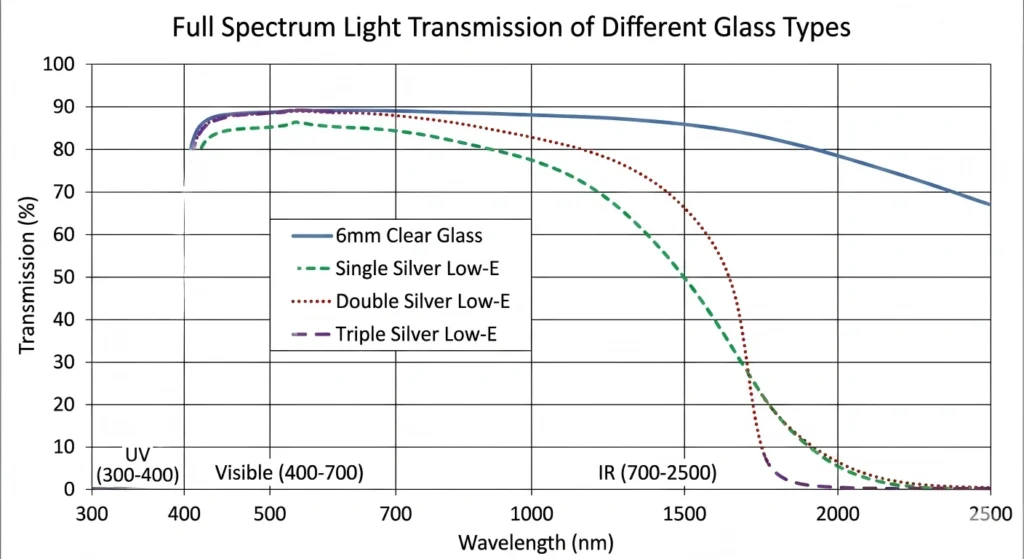
Ever wondered why the performance gap between silver coating generations is so vast? The Xpert BM team is here to break down the science for you. Looking at the spectral transmission curves in Figure 5, the secret is revealed. While all three Low-E types offer similar levels of natural brightness in the visible light band (380–780nm), the infrared region (780–2500nm) tells a different story.
In this heat-carrying zone, transmittance drops significantly as you move from single to triple silver. This is exactly why Triple Silver is the undisputed king of heat rejection, resulting in the gIR ranking we established earlier: Single > Double > Triple.
Figure 5 – Spectral Transmission Curves of Low E Glass
Installed Windows: How to Tell if You Have Single, Double, or Triple Silver Low-E Glass?
Because Low-E coatings are incredibly thin, they are nearly impossible to identify or evaluate with the naked eye or simple DIY methods. Once Low E glass IGUs is installed, it becomes even more challenging: it cannot be easily removed, and tempered glass cannot be cut into samples for traditional laboratory testing. Below, we introduce a non-destructive method to differentiate between Single, Double, and Triple Silver Low-E glass.
Important Note: This method is not designed to ‘count’ silver layers with absolute certainty. Instead, it measures how the Insulated Glass Unit (IGU) transmits and reflects sunlight to evaluate its overall energy efficiency. However, by cross-referencing these measurements with current Low-E glass technology and product databases, we can generally identify whether a unit is Single, Double, or Triple Silver.
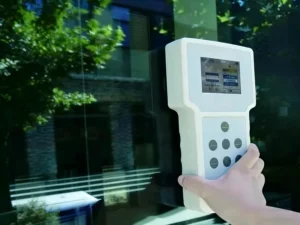
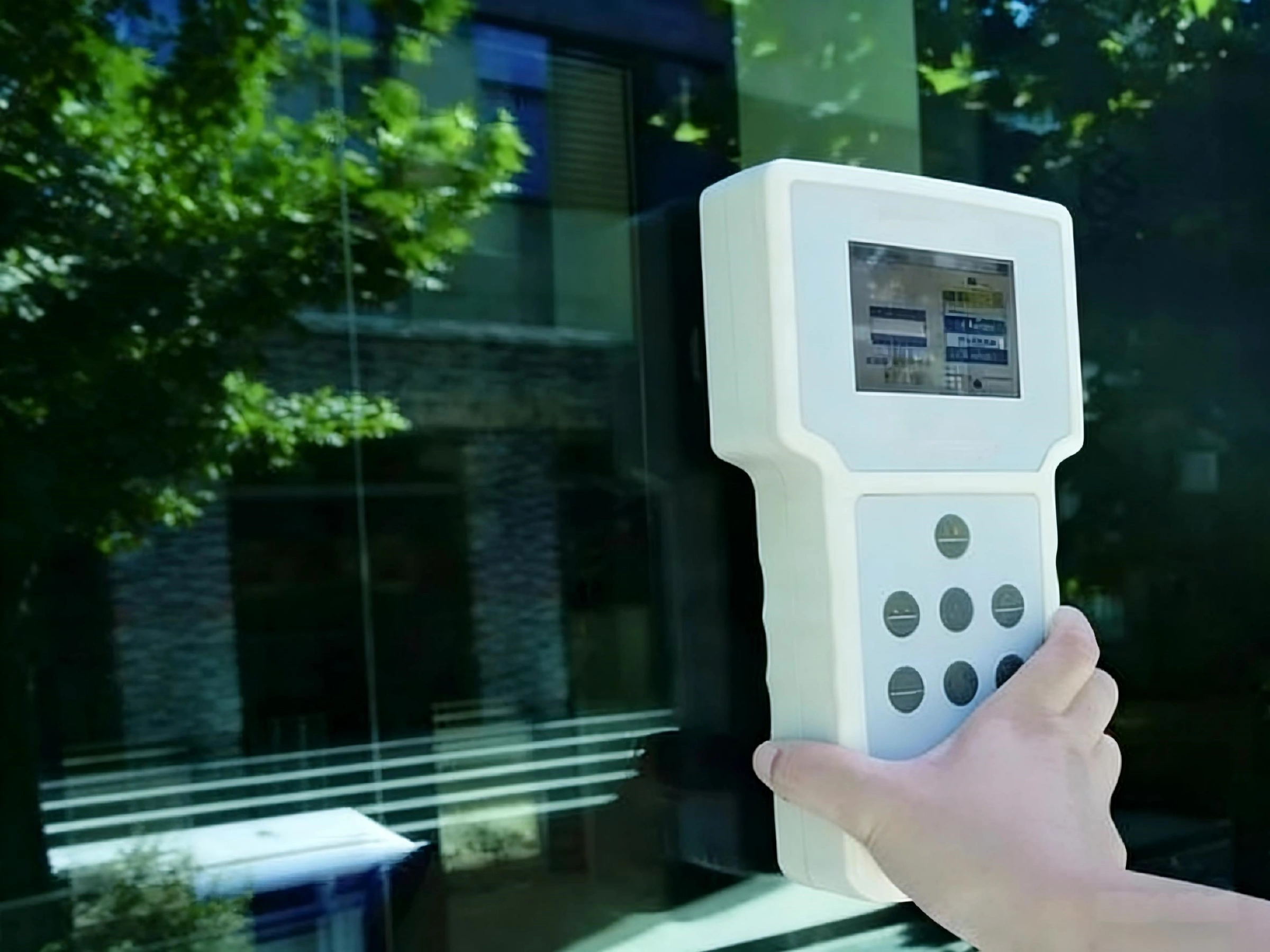
Step 1: Using an Insulated Low E Glass Unit Emissivity Meter
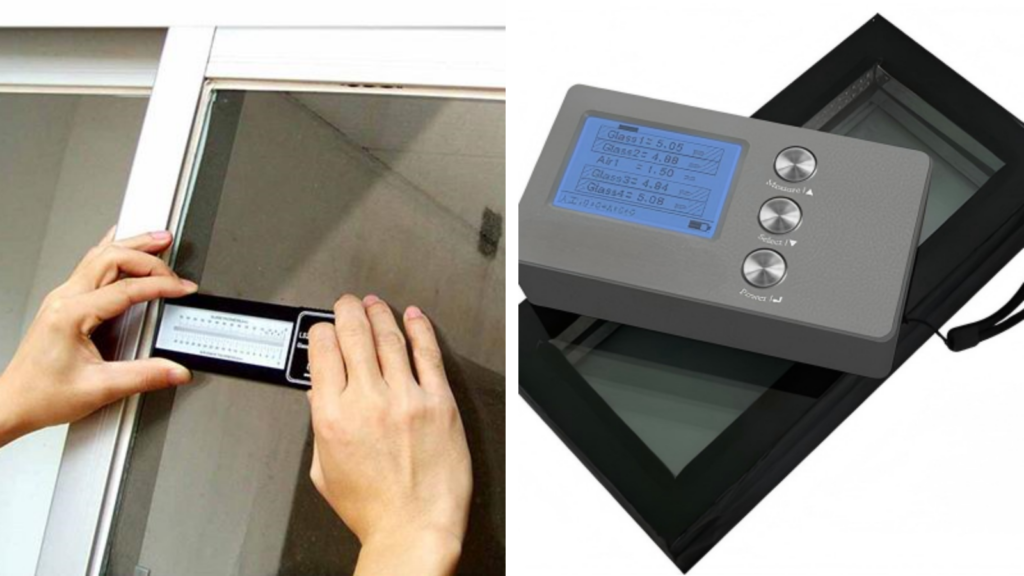
While emissivity testing, combined with professional experience, provides a strong indication of whether the glass is single, double, or triple silver Low E glass, it is not sufficient to serve as a definitive classification on its own.
Step 2: Conduct Spectral Analysis to Obtain Transmittance and Reflectance Curves.
Ready to optimize your building’s energy performance? Take the next step in your project. Tell us your specifications or climate requirements, and we’ll provide a tailored glazing solution that maximizes efficiency and budget.